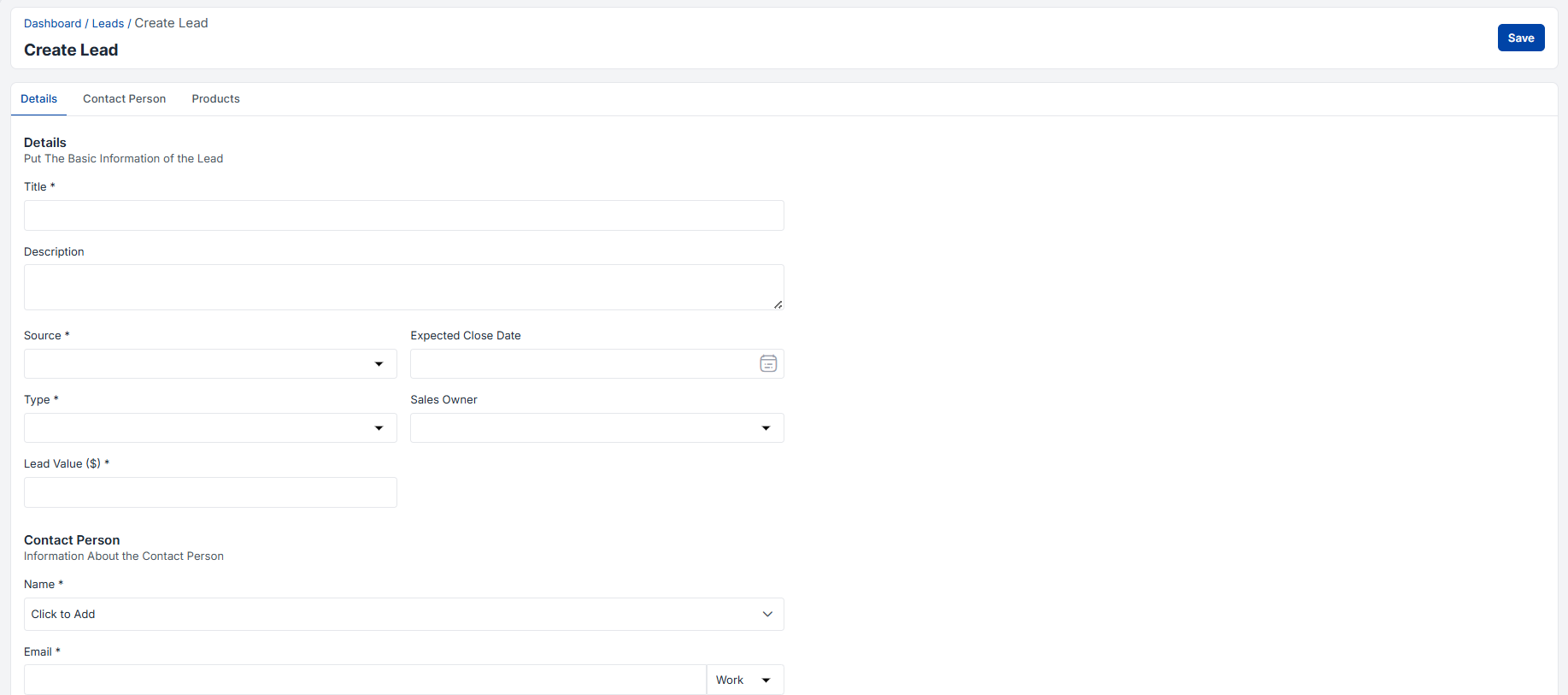
Comprehensive Lead Creation Process

Manual Lead Creation Walkthrough 

Navigation Path: Admin Panel → Leads → Create Lead

Step 1: Lead Overview Configuration

Title Field Management:

The title field serves as the primary identifier for your lead record, providing instant context about the opportunity.

Title Best Practices:

  • Company Name + Opportunity: “Acme Corp – ERP Implementation”
  • Contact Name + Interest: “John Smith – Marketing Automation Interest”
  • Project Type + Value: “Manufacturing Upgrade – $50K Project”
  • Timeline + Solution: “Q1 2024 – Cloud Migration Project”
Advanced Title Strategies:

  • Priority Indicators: Use prefixes like “HOT:”, “URGENT:”, or “HIGH VALUE:”
  • Source Identification: Include lead source in title for quick reference
  • Stage Clarity: Indicate current qualification level
  • Team Assignment: Include territory or team designation

Step 2: Description Field Deep Dive

Comprehensive Description Framework:

The description field captures detailed opportunity context, providing sales teams with essential background information for effective follow-up.

Description Components:

  1. Initial Contact Context: How and when the lead was generated
  2. Expressed Interest: Specific products, services, or solutions mentioned
  3. Business Challenge: Problems or pain points the prospect is facing
  4. Timeline Information: Expressed or implied decision timeline
  5. Stakeholder Information: Key people involved in the decision process
  6. Competitive Landscape: Known competitors in consideration
  7. Next Steps: Planned follow-up actions and objectives

Step 3: Lead Value Estimation

Value Calculation Methodologies:
Lead value represents the potential revenue opportunity and helps prioritize sales efforts and resource allocation.

Calculation Approaches:

  • Product/Service Based: Sum of specific products/services mentioned
  • Historical Analysis: Average deal size for similar leads
  • Prospect Size: Company revenue or employee count multipliers
  • Industry Standards: Vertical-specific average deal values
  • Qualification Score: Value adjusted based on qualification level

Value Categories:

  • Tier 1 (Enterprise): $100,000+ potential deals
  • Tier 2 (Mid-Market): $25,000 – $100,000 potential deals
  • Tier 3 (SMB): $5,000 – $25,000 potential deals
  • Tier 4 (Small Business): Under $5,000 potential deals

Dynamic Value Updates:

  • Qualification Refinement: Adjust values as more information is gathered
  • Scope Changes: Update based on expanded or reduced requirements
  • Competition Impact: Adjust based on competitive pressure
  • Timeline Changes: Modify based on urgency or delay factors

Step 4: Source Attribution Management

Comprehensive Source Tracking:
Source attribution enables marketing ROI calculation and lead generation optimization.
Primary Source Categories:

Email Sources:

  • Newsletter Campaigns: Specific campaign identification
  • Promotional Emails: Sale or special offer responses
  • Nurture Sequences: Drip campaign engagement
  • Event Invitations: Webinar or event-based leads
  • Cold Email Outreach: Direct sales prospecting results

Web Sources:

  • Organic Search: SEO-driven website visits
  • Paid Search: Google Ads, Bing Ads campaigns
  • Direct Website: Type-in traffic and bookmarked visits
  • Landing Pages: Campaign-specific page conversions
  • Blog Content: Content marketing lead generation

Phone Sources:

  • Inbound Calls: Customer-initiated phone inquiries
  • Cold Calls: Outbound prospecting calls
  • Warm Calls: Referral or follow-up calls
  • Support Calls: Service inquiries revealing sales opportunities
  • Partner Calls: Channel partner referrals

Advanced Source Analytics:

  • Multi-Touch Attribution: Track all touchpoints leading to lead creation
  • Campaign ROI: Calculate cost-per-lead by source
  • Conversion Rates: Source-specific lead-to-customer conversion
  • Quality Scoring: Lead quality assessment by source

Step 5: Lead Type Classification

Strategic Lead Categorization:
Lead types help sales teams apply appropriate strategies and resource allocation based on lead characteristics.

Business Relationship Types:

  • New Business: First-time prospects with no previous relationship
  • Existing Customer: Current clients interested in additional products/services
  • Former Customer: Previous clients considering re-engagement
  • Partner Lead: Opportunities from channel partners
  • Referral Lead: Prospects referred by existing relationships

Opportunity Characteristics:

  • Inbound Interest: Self-identified prospects expressing interest
  • Outbound Prospecting: Sales-generated opportunities
  • Competitive Displacement: Prospects currently using competitor solutions
  • Expansion Opportunity: Existing customer growth potential
  • Renewal Opportunity: Contract renewal or upgrade situations

Urgency Classifications:

  • Hot Lead: Immediate buying intent with short timeline
  • Warm Lead: Active interest with medium-term timeline
  • Cold Lead: Early-stage interest requiring nurturing
  • Information Seeker: Research phase without immediate buying intent

Step 6: Sales Owner Assignment Strategy

Intelligent Assignment Methods:
Sales owner assignment ensures proper lead follow-up and account responsibility.

Assignment Criteria:

  • Geographic Territory: Location-based lead distribution
  • Industry Expertise: Vertical specialization alignment
  • Product Specialization: Solution-specific expertise matching
  • Account Size: Deal size and complexity matching
  • Relationship History: Existing relationship continuity
  • Workload Balance: Even distribution across team members

Assignment Automation:

  • Round-Robin Distribution: Automatic rotation among team members
  • Skills-Based Routing: Expertise and experience matching
  • Availability-Based: Real-time capacity consideration
  • Performance-Based: Assignment based on conversion rates
  • Hybrid Approaches: Multiple criteria combination

Assignment Best Practices:

  • Clear Ownership: Single primary owner with backup support
  • Timely Assignment: Immediate assignment for fast follow-up
  • Assignment Notifications: Automatic alerts to assigned owners
  • Assignment History: Track assignment changes and reasons
  • Performance Tracking: Monitor assignment effectiveness

Step 7: Expected Close Date Strategy

Timeline Estimation Framework:
Expected close dates enable pipeline forecasting and resource planning.

Timeline Factors:

  • Buying Process Complexity: Number of stakeholders and approval levels
  • Solution Complexity: Implementation requirements and timeline
  • Budget Cycle: Customer’s financial planning and approval cycles
  • Competitive Evaluation: Time required for vendor comparison
  • Decision Urgency: Business drivers creating timeline pressure

Timeline Categories:

  • Immediate (0-30 days): Urgent needs with quick decision processes
  • Short-term (1-3 months): Active evaluation with defined timeline
  • Medium-term (3-6 months): Planning phase with future implementation
  • Long-term (6+ months): Early-stage interest requiring nurturing

Timeline Accuracy Improvement:

  • Discovery Questions: Specific timeline-related qualification questions
  • Stakeholder Mapping: Understanding decision-making process
  • Budget Cycle Alignment: Matching customer financial planning
  • Implementation Planning: Realistic deployment timeline consideration
leads-step-by-step